
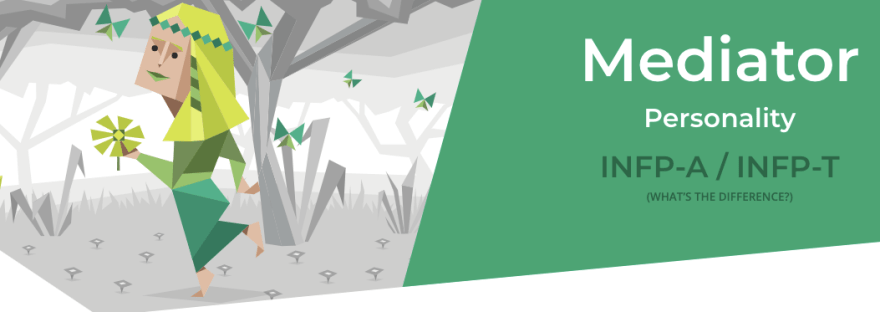
An assignment for one of the classes I’m taking was to take a Myers Briggs personality test online last week, and then write a paper reflecting on how my results might affect my performance as a school librarian (since that’s what I’m going to school for). It had been a while since I’d taken that test, and I love things that give me insight into how I operate, so I was happy do it. It showed that I’m an INFP: Introversion (over Extroversion), iNtuition (over Sensing), Feeling (over Thinking), and Perceiving or Prospecting (over Judging). But the only categories that showed significant differences for me were Introversion and iNtuition–my Feeling over Thinking and Perceiving/Prospecting over Judging were marginal.
These results aren’t surprising for me. I definitely feel like an introvert, and I also trust my intuition over what my five senses tell me (though I take my senses into account too). And I do think I’m pretty well balanced between Thinking and Feeling, and Perceiving/Prospecting and Judging. But where it gets really fun with these things for me is reading the breakdown of each type. And I had The Bearded One take it too, so we could compare results. He actually found one at www.16personalities.com that gives each type a title, too, so I also took that one. Again it showed that I’m an INFP, but it labeled me “The Mediator”. The Bearded One’s results showed him to be an ENTP: “The Debater”. Debaters are generally described as “curious and flexible thinkers who cannot resist an intellectual challenge” whereas Mediators are “poetic, kind, and altruistic people, always eager to help a good cause”. I think those are somewhat accurate descriptions of us, but in the more detailed descriptions it really got personal for me.
The first quote that stuck out to me was, “Few things make Mediators more uneasy than pretending to be someone they aren’t.” And later in the same paragraph, “They can’t help but muse about the meaning and purpose of life, dreaming up all sorts of stories, ideas, and possibilities along the way.” It continues, saying, “Through these imaginative landscapes, Mediators can explore their own inner nature as well as their place in the world. While this is a beautiful trait, these personalities sometimes show a tendency to daydream and fantasize rather than take action. To avoid feeling frustrated, unfulfilled, or incapable, Mediators need to make sure that they take steps to turn their dreams and ideas into reality.” Oof.
Then, in the next section, it hit me with, “People with this personality type tend to feel directionless or stuck until they connect with a sense of purpose for their lives.” And, “While Mediators want to help everyone, they need to focus their energy and efforts – otherwise, they can end up exhausted.” And, “Fortunately, like flowers in the spring, Mediators’ creativity and idealism can bloom even after the darkest of seasons. Although they know the world will never be perfect, Mediators still care about making it better however they can.” And all of that was just on the Introduction page. Going through other pages there were more quotes that I feel I could have written about myself like this on the Friendships page, “When it comes to their social lives, Mediators (INFPs) may find themselves caught in a web of contradictions. People with this personality type crave alone time, but they’re also vulnerable to loneliness. They long to feel accepted and well-liked, but they hate the idea of pretending to be anyone but their authentic selves. And while they hesitate to draw attention to themselves, they don’t want to be invisible, either.”
And then there’s this on the Workplace Habits page, “Mediator employees enjoy having freedom and latitude. Their creativity and insight enable them to shake up old, ineffective ways of doing things – as long as they’re given the chance to speak up and make changes. That said, they tend to benefit from deadlines and clear expectations to keep them on track. Otherwise, people with this personality type might get caught up in procrastination, bouncing from one idea to another rather than settling down and crossing tasks off their to-do list.”
All of this is to say that I felt very seen and understood by this website. If you want to understand me better, feel free to look at the whole INFP profile. If you want to understand yourself better, take the quiz. And, especially if I know you in real life, let me know what you find out about yourself. I think it takes all types to make the world function at its best, and it never hurts to understand the people around you better.
 growingmoxie.com