

The Bearded One and I like to watch things–movies, tv shows. For a while during the pandemic we were mostly rewatching things like New Girl and The Office. We did watch Tiger King. And Ozark. But a lot of our tv time was spent watching things that we had watched before. I heard somewhere once that rewatching movies and tv shows can be an anxiety response, which makes perfect sense. There’s definitely something comforting about watching a show where you’re familiar with the characters and you know what’s going to happen. And during a pandemic when we didn’t know what life was going to look like one day to the next, that comfort was appealing.
Okay, things are going to get spoiler-y now, so STOP READING IF YOU DON’T WANT TO KNOW WHAT HAPPENS IN DEFENDING JACOB (a miniseries on Apple TV+) OR THE LITTLE THINGS (a movie on HBO Max). I mean it–consider yourself warned…

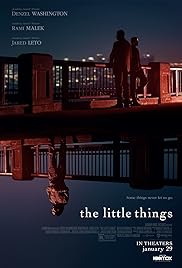
Lately, we’ve been branching out a little more and watching things that we HAVEN’T seen before, and I have to tell you: it’s not going great for me. We’ve watched two things recently where the endings were ambiguous. I don’t know about you, but I generally like my books and movies to wrap up nicely–they have clear endings and either you liked the outcome or you didn’t, but there WAS an outcome.
In both The Little Things (which features Denzel Washington, Rami Malek, and Jared Leto), AND Defending Jacob (which stars Chris Evans, Jaeden Martell, and Michelle Dockery) a murder has been committed, and both stories are focused somewhat on the investigations into those murders. At the end of both, though, the viewer is left wondering who actually killed the victim. We never really learn for sure what happened. Although I do think I have the mental space to watch new things these days, I don’t think I’m quite ready to watch things that will keep me wondering after they’re over. I’m all for suspense and watching things that make me think, but I don’t like investing time and energy watching something that doesn’t have an outcome. What is that, anyway?? It’s like in music when there’s a 7th chord that never resolves–it just makes me uncomfortable. Sometimes the most satisfying parts of a movie are when the truth is revealed, like in A Few Good Men–you know, the one with Tom Cruise and Demi Moore, where Tom Cruise as a lawyer says, “I want the truth!“, and Jack Nicholson’s character responds with that famous line, “You can’t handle the truth!“, and then he goes on to incriminate himself and others, and let the audience know what happened. Satisfying–whether you agree with what ended up happening to Colonel Nathan Jessup or not.

As I was typing all of this, I was reminded of a movie I used to show in class when I was a high school Spanish teacher. It was called “La Misma Luna” (the English version was called, “Under the Same Moon”). I love this movie. It follows a little boy, Carlos Reyes (played by Adrian Alonso) who crosses the border from Mexico into the U.S. to find his mother after his grandmother, who had been his caregiver, died in Mexico. Oh, by the way, stop reading NOW if you don’t want spoilers of La Misma Luna! Anyway, the whole movie is centered around this little boy’s quest to find his mother and, in the last scene, Carlos and his mother finally find each other, but they’re still separated by a busy street. The movie ends with a shot of a “Walk” sign lighting up, signaling that Carlos and/or his mother could ‘cross’.

Every time I showed this movie, without fail, some of my students got really invested in Carlos’s journey. And every time it ended, without fail, there would be a collective groan from a lot of these students, because they didn’t get the satisfaction of having all of the loose ends wrapped up tidily. Personally, I was kind of okay with it ending this way–the hero, Carlitos, found his mother, and at least that was resolved. But my students wanted to know what happened after that–did Carlos and his mother go back to Mexico? Did they stay in Los Angeles? What about the man his mother had married partly to get citizenship so she could bring Carlos to live with her? And, perhaps the most pressing question, what happened to Enrique–the man Carlos met while briefly working on a tomato farm, who ended up traveling with Carlos to Los Angeles so he could protect the boy from all the threats that exist, and who sacrificed his own freedom so Carlos could get away from the police?? So many of my students hated that they would never get answers to those questions. It always made me laugh a little, but I also get it.
With The Little Things and Defending Jacob, it was a whole other level of uncertainty, though. Were the main suspects in each of these murders ACTUALLY the ones who committed the crimes? WE NEVER FIND OUT. Why, when we’re in the middle of one of the more uncertain times in the history of this country, do these writers/directors/producers want us to feel uncomfortable? Is it a projection of what they’re feeling that they want to get out? Is it just a reflection of where we are in society–that it’s hard to know for sure who are the heroes and who are the villains? Or a commentary on the goodness and evil that both reside in us all?? I feel like there’s enough uncertainty in life as it is, especially right now–I don’t need to throw more things to worry about at my brain. So I’m probably going to go back to not watching new things for a while, so I can go back to sleeping at night like my dog in the picture at the top of this page.
 growingmoxie.com