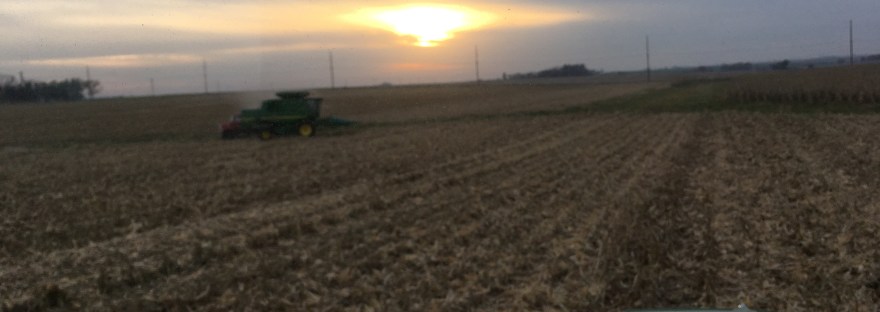
I started out this week thinking I was going to write a blog post about a harvest moon, but then I started reading about the harvest moon, and it didn’t hook me. And, since we’ve been picking corn the last three days, I decided I’d rather just write about growing, and harvesting, and life, and how plant life often parallels the human experience.
There’s a lot of growing and changing that goes on in the spring of a person’s life. We need the right conditions to grow and thrive and, as long as we get what we need (see Maslow’s Hierarchy of Needs here), and don’t experience major disruptions, we generally make it to adulthood. I could draw detailed comparisons here between weeds and peer pressure, or pests and bullies, but you get the idea. Basically, until we get into our mid-to-late twenties, we’re just working on becoming who we’re going to be. And then we produce. Some of us put most of our energy into actual reproduction–you know, raising kids and all that. Some of us concentrate on becoming successful in our careers. Some of us don’t care about the traditional definition of success, and just try to make a positive impact on the world. And some of us don’t see continual growth as a goal. I think it’s the same for plants, really.
I think that, often, the way a person grows and develops depends on their circumstances, just like plants. And one thing I’ve always noticed is that the plants on the outside of the fields sometimes appear to perform the worst. They don’t grow consistently, they tend to be smaller, and they often don’t produce much. But the plants around the outside are the ones that take the brunt of everything. There’s not enough cover there to shade the weeds out, and any wind that comes through hits those outside rows harder. Fertilizer, herbicides, and pesticides are more consistently applied to the middle of the fields sometimes leaving the outside rows less nourished and protected, but I think they end up stronger because of it. Similarly, marginalized groups of people get fewer resources, but they’re expected to perform as well as those who get much more support. But, just like the plants in the heart of the fields appear to grow better because they’re shielded from hardship, the people who receive what they need, and support from those around them, seem to perform better…at least on the surface. That is, until they’re tested. There are also sometimes middle parts of a cornfield, which SHOULD be in great shape because they’re surrounded and protected by other plants, and they’ve gotten all of the resources they need but, because they’ve never had to support themselves, a strong wind can cause them to break–they collapse because they weren’t prepared for the storm.
I think people are similar and sometimes I worry that my life has been too easy. I had a pretty great childhood–I always knew I was safe and loved, and never had to worry about food or shelter. I didn’t have to work very hard in school to get decent grades, I’ve had incredibly good luck finding jobs, and I’ve always had a support system. But I’ve never really been tested, and sometimes I’m afraid that if I ever had to face a real storm in life, I might just collapse. I have friends who have experienced all manner of life challenges–unstable childhoods, the death of a parent or spouse, divorce, difficulty finding jobs, etc. And I admire the strength they’ve shown through it all. I’m in my mid-thirties now and, though I hate to tempt fate by putting it out there, I haven’t had any major obstacles to overcome. Like the plants in the middle of the field, I’m lucky enough to have always felt secure, but I don’t want to be the kind of person who would break if a strong wind came along.
Sometimes I feel like this is also why I’ve consistently been an under-performer. I haven’t had to work hard to be relatively comfortable in life, so I just haven’t. But I don’t want to get to the end of the “growing season”, if you will, with nothing to show for all of the benefits I’ve (undeservedly) been fortunate to receive, either. I don’t want to waste these resources and always wonder what I COULD have done or been if I’d just worked harder. And that’s what Growing Moxie is coming out of–my attempt to become who I really want to be–who I could be, if I really worked at it. I want to make some kind of positive impact on the world, no matter how small it may end up being. And, at the risk of sounding painfully cheesy, I want the choices I make in life and the work that I do to lead to a bountiful harvest.
 growingmoxie.com